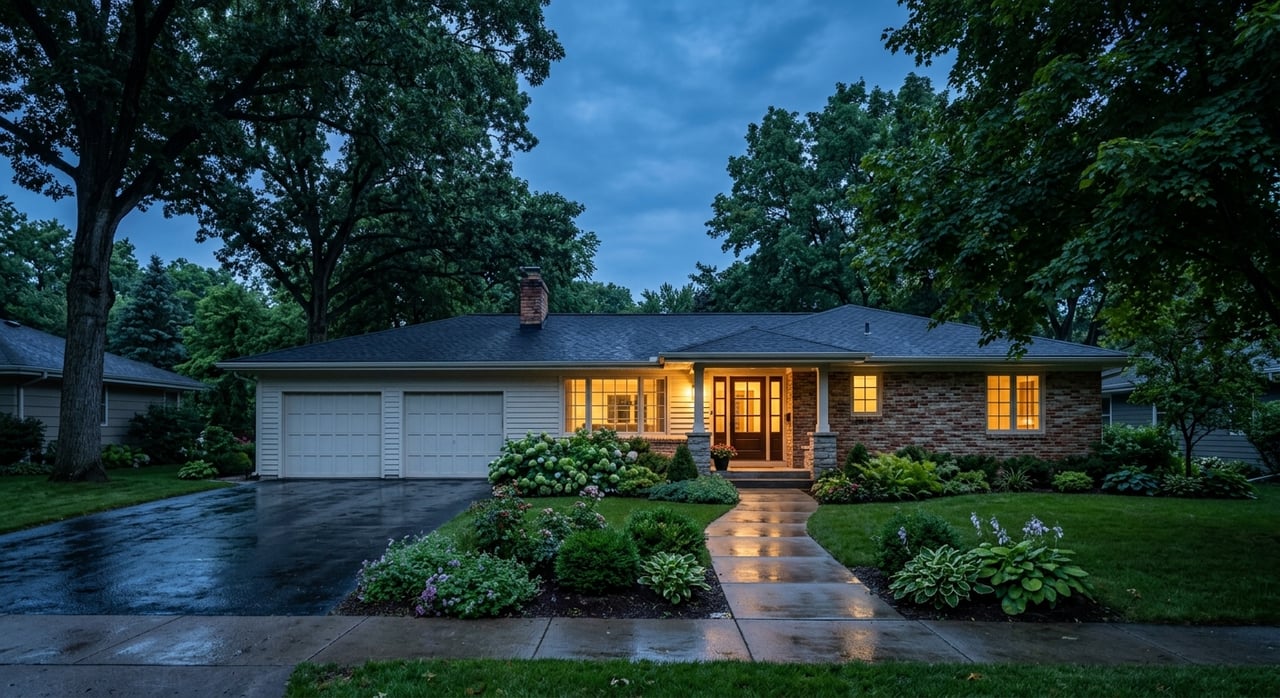
If you are planning to buy in Glenville, it may feel like the market keeps sending mixed signals. One listing sits for weeks, another gets snapped up fast, and pricing can look steady one month and competitive the next. The good news is that a few clear trends can help you make sense of it all, budget with fewer surprises, and act with confidence when the right home appears. Let’s dive in.
Glenville inventory is still limited
One of the biggest trends Glenville homebuyers should watch right now is inventory. Realtor.com shows about 85 homes for sale on one current market snapshot, while its February 2026 trend data shows 75 homes for sale, down 23.81% from a year earlier.
That tells you something important. There are homes on the market, but the number of available listings is still fairly modest, and the active pool can shift quickly from month to month. If you are waiting for a huge wave of new options, the current data does not point to that.
For buyers, limited inventory usually means you need to stay focused. It helps to narrow your price range, know your must-haves, and be ready to tour promptly when a home that fits your goals hits the market.
Prices are holding near asking
Glenville pricing is another trend worth following closely. Realtor.com reports a median listing price of $349,900, while Redfin reported a March 2026 median sale price of $312,282.
Those numbers are not the same metric, so they should not be treated as a direct apples-to-apples comparison. Still, they show a market where sellers are listing with confidence and buyers are continuing to purchase at prices that remain fairly close to asking.
Redfin reports a 98.7% sale-to-list ratio in March 2026, and Realtor.com’s February 2026 trend chart shows a 100% sale-to-list ratio. In plain terms, many homes are selling very close to their list price, even if not every property sparks a bidding war.
That matters when you build your offer strategy. If you are hoping every seller will negotiate sharply downward, the market data does not really support that expectation across the board.
Speed depends on the home
Another key trend is market speed, and this is where Glenville looks a little more nuanced. Realtor.com describes Glenville as balanced in February 2026 with a 37-day median days on market, while Redfin reports a 57-day median in March 2026, up from 24 days a year earlier.
At first glance, that may seem inconsistent. The safest takeaway is that Glenville is not moving at one uniform pace. Some homes take longer, while well-priced and well-presented properties can still move very quickly.
Redfin also notes that hot homes can go pending in about 8 days and sell around 3% above list. So while the broader market may not be all-out frenzied, the best-positioned homes can still create pressure fast.
Price drops are part of the picture
One of the most useful trends for buyers is that not every listing is flying off the shelf. Redfin reports that 26.7% of homes saw price drops.
That is a meaningful signal. In a market with modest inventory and some competitive listings, there is still room for buyers to find opportunities, especially when a home has been sitting or started too high.
This is where careful tracking matters. If a home has been on the market longer than expected, or if the price has already been adjusted, your negotiating position may be different than it would be on a just-listed property.
Competition is real, but not everywhere
Glenville is not a one-speed market. Redfin describes it as very competitive and says many homes receive multiple offers, with some contingencies waived. At the same time, Realtor.com’s balanced-market label suggests the experience can vary by price point, condition, and presentation.
That means you should not assume every home needs an aggressive offer with stripped-down protections. But you also should not expect a slow, low-pressure process on every listing.
A better approach is to evaluate each property on its own terms. A newly listed home in strong condition may require quick action, while a home with longer market time may allow a more measured negotiation.
Your budget needs more than the list price
One of the most important buyer trends right now has less to do with competition and more to do with preparation. Mortgage rates and closing costs can have a major impact on what feels affordable each month and how much cash you need upfront.
Freddie Mac’s Primary Mortgage Market Survey shows a 30-year fixed rate of 6.30% as of April 30, 2026. At that rate, the monthly principal and interest payment on a $349,900 purchase with 10% down is about $1,951, or about $1,734 with 20% down.
Using Redfin’s March 2026 median sale price of $312,282, the comparable monthly principal and interest payment is about $1,741 with 10% down and about $1,548 with 20% down. Those figures do not include taxes, insurance, or other housing costs, so they are best used as a planning baseline.
Closing costs also deserve attention. The research report notes that typical closing costs often run about 2% to 5% of the purchase price, which would be roughly $7,000 to $17,500 on a $349,900 home.
For a buyer targeting Glenville’s current list-price snapshot, 10% down plus estimated closing costs suggests roughly $42,000 to $52,500 in cash to close before moving costs, inspections, and reserves. That planning range can help you avoid getting emotionally attached to a home before your full budget is truly ready.
Property taxes affect your cash flow
In Glenville, your housing budget should also account for the local tax calendar. According to the Town of Glenville, town and county tax bills are typically mailed on January 1, and school tax bills are typically mailed on September 1.
That timing matters because homeownership costs are not just about the mortgage payment. As you plan your monthly and annual housing budget, it is smart to think through when these bills arrive and how they affect your cash flow.
This is especially important if you are stretching to buy at the top of your comfort range. A payment that looks manageable on paper can feel tighter once you include recurring taxes and the normal costs of maintaining a home.
Preapproval matters more in a market like this
Because Glenville has limited inventory and some homes can still move quickly, serious buyers should treat preapproval as an early step, not a last-minute task. It helps you understand your true price range and shows sellers that you are prepared.
It also makes your search more efficient. Instead of guessing what works, you can focus on homes that match both your goals and your financing.
In a market where some listings move fast and others do not, preparation gives you flexibility. You can move quickly when you need to without feeling rushed into the wrong decision.
Keep your offer strategy practical
When buyers hear that some Glenville homes get multiple offers, the temptation is to assume every offer needs to be aggressive. In reality, your offer strategy should fit the specific home, the timing, and the level of competition.
The research report points to a practical middle ground. Some homes are seeing price drops, while others attract multiple offers and occasional contingency waivers. That means your default plan should be to protect your core interests, especially financing and inspection, unless there is a strong property-specific reason to tighten terms.
This kind of disciplined approach is often what keeps buyers from making costly mistakes. Moving quickly is important, but so is understanding what you are buying and what your budget can realistically support.
What Glenville buyers should do now
If you are thinking about buying in Glenville, the clearest trend is not just low inventory or near-asking prices. It is that success depends on being organized before the right listing shows up.
A simple plan can make a big difference:
- Get preapproved before you tour seriously.
- Set a budget that includes down payment, closing costs, and ongoing tax obligations.
- Watch new listings closely because the best homes may move fast.
- Stay open to opportunity on homes with longer days on market or price reductions.
- Use a property-by-property offer strategy instead of assuming every listing needs the same approach.
In a market like Glenville, clarity wins. When you know your numbers, understand the pace, and stay flexible, you are in a much better position to buy with confidence.
If you want clear guidance, quick communication, and practical insight on home condition, upgrades, and offer strategy in Glenville and across the Capital Region, connect with Dufek Real Estate Group.
FAQs
What is the current housing inventory trend in Glenville, NY?
- Glenville inventory appears limited but active, with Realtor.com showing about 75 to 85 homes for sale across recent snapshots and a year-over-year decline in available homes in its February 2026 trend data.
Are Glenville homes selling above asking price right now?
- Some are, but not all. Redfin reports that 15.0% of homes sold above list price in March 2026, while overall sale-to-list ratios remained close to asking.
How fast are homes selling in Glenville, NY?
- It depends on the property. Realtor.com reported a 37-day median days on market in February 2026, while Redfin reported 57 days in March 2026, but hot homes may go pending in about 8 days.
How much cash should Glenville homebuyers budget upfront?
- On a $349,900 purchase, a buyer putting 10% down may need roughly $42,000 to $52,500 in cash to close before moving costs, inspections, and reserves, based on the research report’s planning estimates.
What local tax timing should Glenville buyers know?
- The Town of Glenville says town and county tax bills are typically mailed on January 1, and school tax bills are typically mailed on September 1, so buyers should plan for those recurring costs as part of overall ownership budgeting.
Should buyers waive contingencies in the Glenville housing market?
- Not by default. Because Glenville shows both competition and price reductions, many buyers are better served by keeping core protections like financing and inspection contingencies unless a specific property clearly calls for a different strategy.